Codex Web GPT
A desktop bridge that adds ChatGPT Web tiers to Codex’s native model picker. You choose a model and keep working in the same task with the same context, streaming UI, approvals, and tools. Browser automation runs underneath that interface.
2026 · open source, MIT · production release · TypeScript · Bun · Electron · Playwright · MCP
Open-source reach.
32,000+
GitHub release asset downloads
Why I built it
OpenCodex showed me that the model picker was the right place for this integration. I knew the Codex app server could support a custom Responses route, so I used that route to make ChatGPT Web behave like another Codex backend.
I am the sole developer and maintainer of the repository. I built the bridge, browser adapter, Electron launcher, MCP path, installers, release workflow, and documentation. Once it is installed, you select a web model in Codex and continue working in the same interface.
How a browser turn works
Codex stays in control of the task. ChatGPT Web is used only as the selected model backend for that turn.
Codex prepares the request
Codex keeps the complete task and sends the current instructions, messages, tool state, and attachments just as it would for a native model.
A fresh Temporary Chat receives it
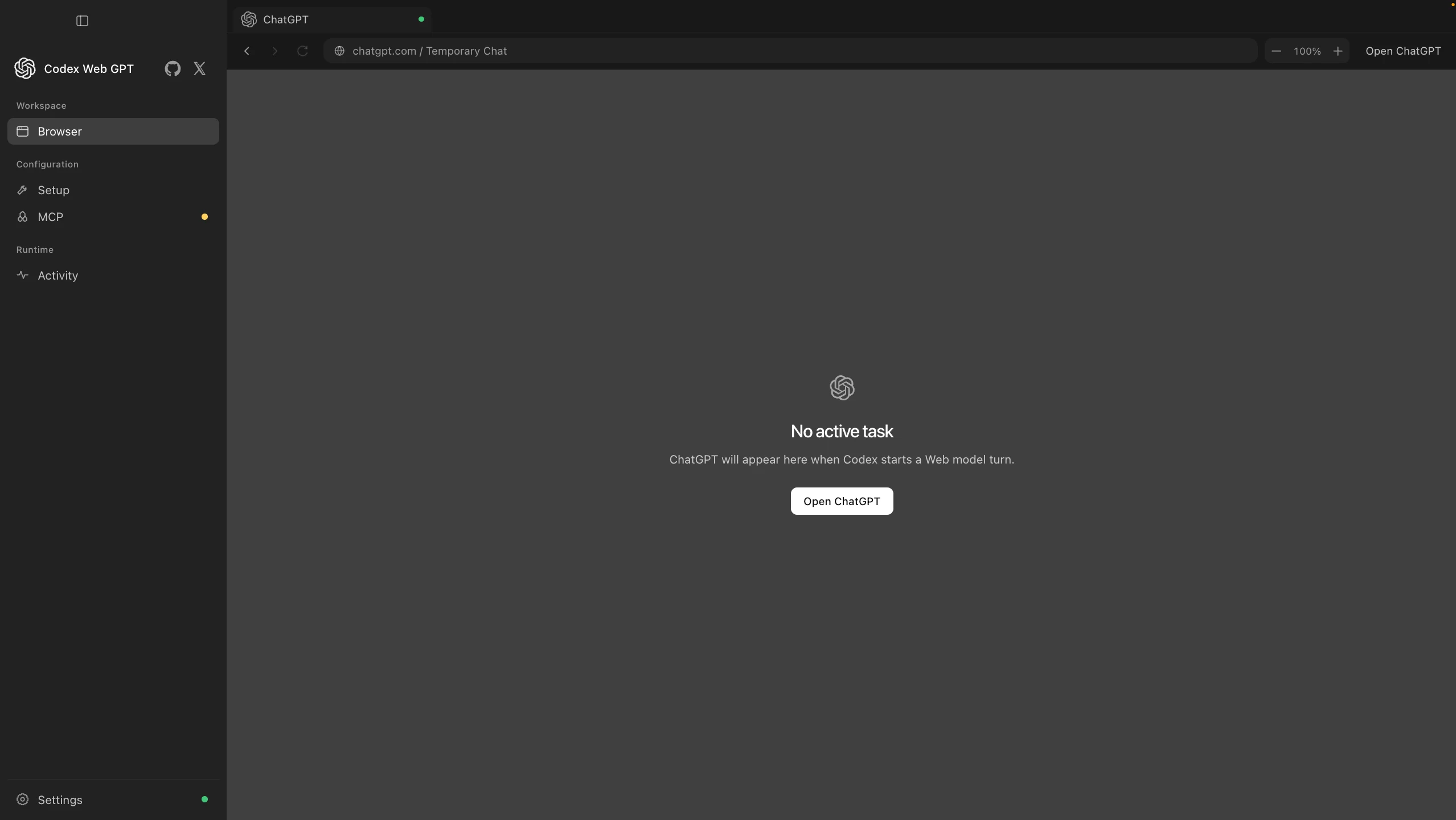
Each browser turn starts in a new Temporary Chat. The full task context is sent again, so the browser never becomes a second conversation that can drift away from Codex.
The response returns as a Codex stream
Reasoning, Markdown, lifecycle events, and tool activity return through the Responses-compatible route and appear in the same local task.
Tool calls go back through MCP
The active Codex task still owns the filesystem, shell, images, approvals, and configured integrations. MCP carries each call to that harness and returns the result to the browser model.
The MCP decision
Text-only browser routing was not enough. Codex would lose its filesystem, shell, approvals, and configured tools as soon as the request moved to ChatGPT Web. The solution was to expose the active Codex harness to the web model through MCP.
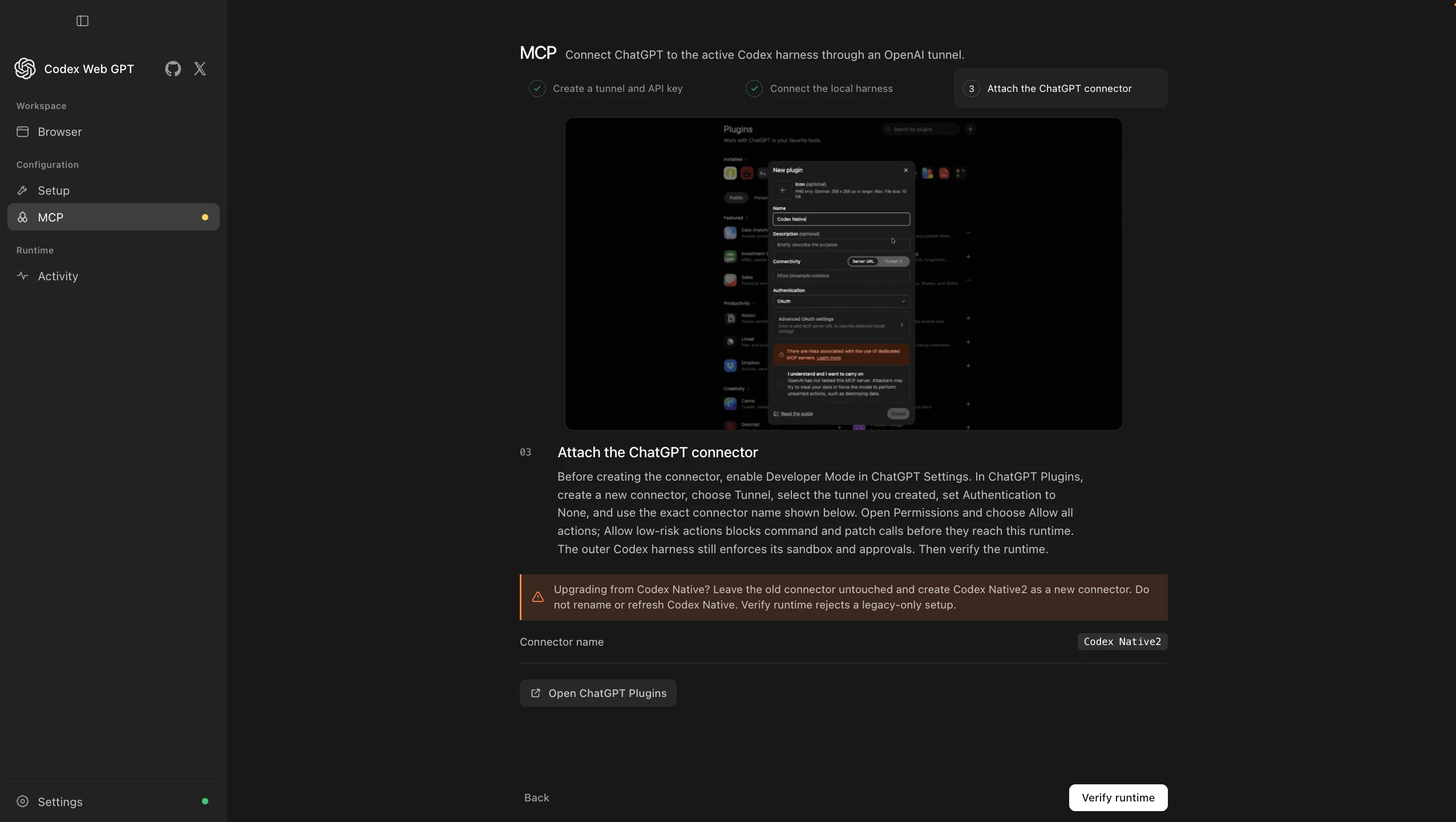
Codex still owns execution, sandbox policy, and approvals. The browser model requests a tool through the tunnel, receives the result, and continues the same response. Tool-capable ChatGPT tiers can therefore run normal Codex tasks. Pro remains read-only because its current ChatGPT surface does not expose the required custom MCP connector.
The work after the prototype
The bridge worked early. Making it reliable on other people’s machines took most of the work: installation, diagnostics, updates, and support.
Private browser profile
The launcher uses a dedicated Electron profile. It imports only the required ChatGPT session state after sign-in and removes the temporary transfer profile.
Native model catalog
ChatGPT Web Instant, Medium, High, and Extra High appear beside native Codex models. Disabling the bridge restores the previous Codex route and catalog.
Setup and diagnostics
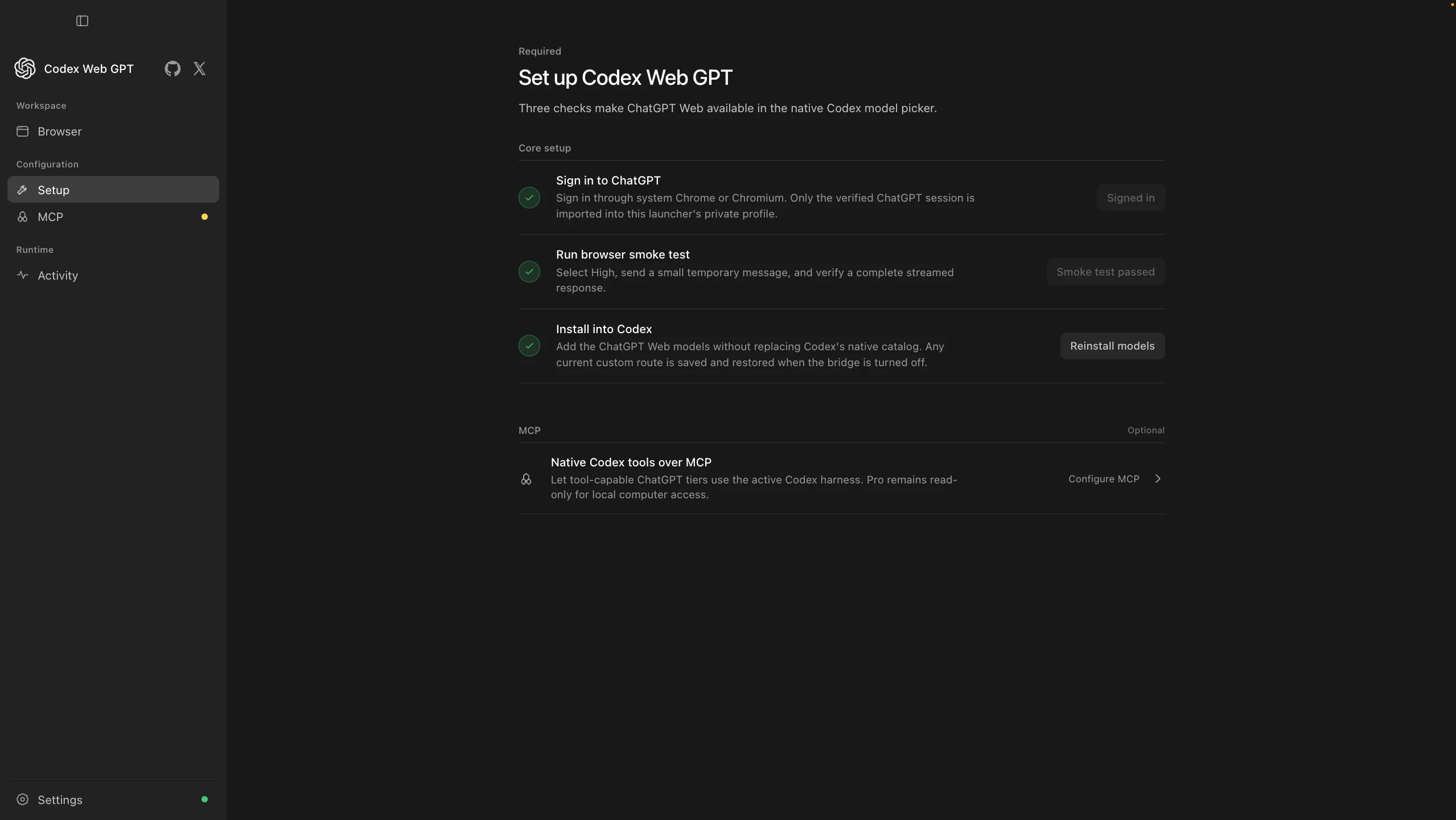
The launcher verifies sign-in with a real streamed smoke test before installing the models. Health checks and Doctor show the exact failed stage when setup breaks.
Isolated task tabs
Up to five Codex tasks can keep separate browser turns alive at once. Completed tabs stay inspectable, but their chat history is never reused as model context.
Explicit failure states
UI drift, missing tool results, invalid checkpoints, and unsupported model or tool combinations stop with an error. The bridge does not silently switch models or transports.
Cross-platform releases
The repository includes automated release workflows, installers, startup lifecycle, logs, diagnostics, and packages for macOS, Windows, and Linux.
From the product
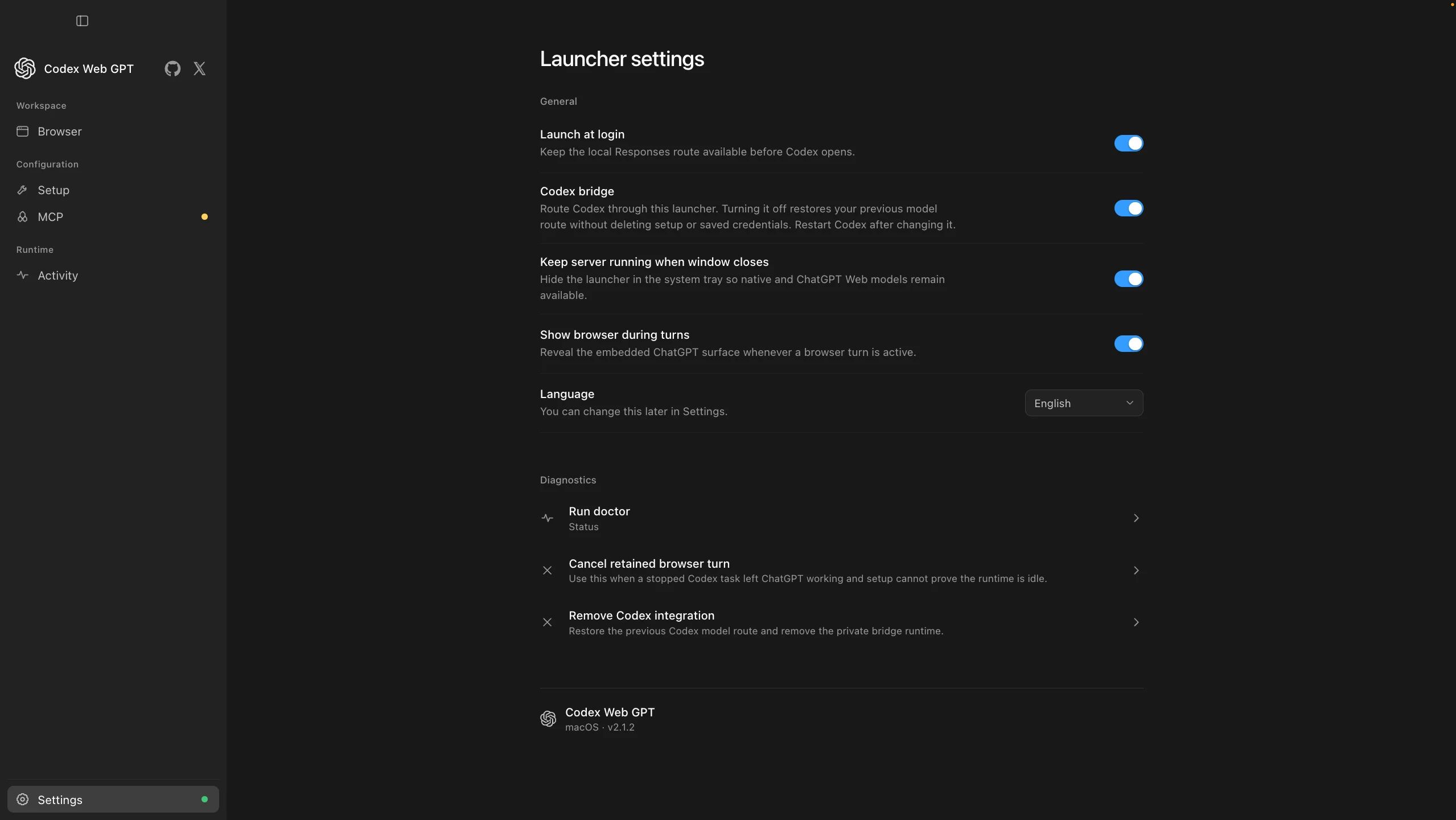
Setup, MCP connection, diagnostics, and the private browser surface from the production launcher.
Open-source launch
The repository passed 2,500 stars, 32,000 GitHub release asset downloads, and 250 forks. Reports from macOS, Windows, and Linux drove fixes across authentication, setup, streaming, and runtime lifecycle.
Built and maintained alone
I am responsible for the entire repository, from the bridge and desktop app to releases, documentation, issue triage, and user support.
System builder
Built the Responses-compatible route, model catalog integration, streaming lifecycle, task-bound browser workers, context transport, MCP tunnel, native passthrough, and explicit failure handling.
Fullstack
The repository spans a Bun and TypeScript service, Electron desktop launcher, browser automation, setup and diagnostics UI, installers, release workflows, persistence, and cross-platform behavior.
Open-source maintainer
Shipped frequent releases, triaged real environment failures, closed more than sixty issues and pull requests, documented security boundaries, and turned community reports into product fixes during the launch window.
Open source under MIT. Source, installers, releases, architecture, and security documentation are on
GitHub.
OpenCodex inspired the model-picker integration and provided selected MIT-licensed bridge foundations. Codex Web GPT adds its own Codex-first routing, fresh-turn context transport, desktop launcher, and MCP connection to the active local harness.
Codex Web GPT is the largest of several projects I have built around Codex. Smaller experiments, including
ChatGPT Persona Voice, live on my GitHub—I keep making them because I genuinely enjoy exploring and extending the app.