HackCode
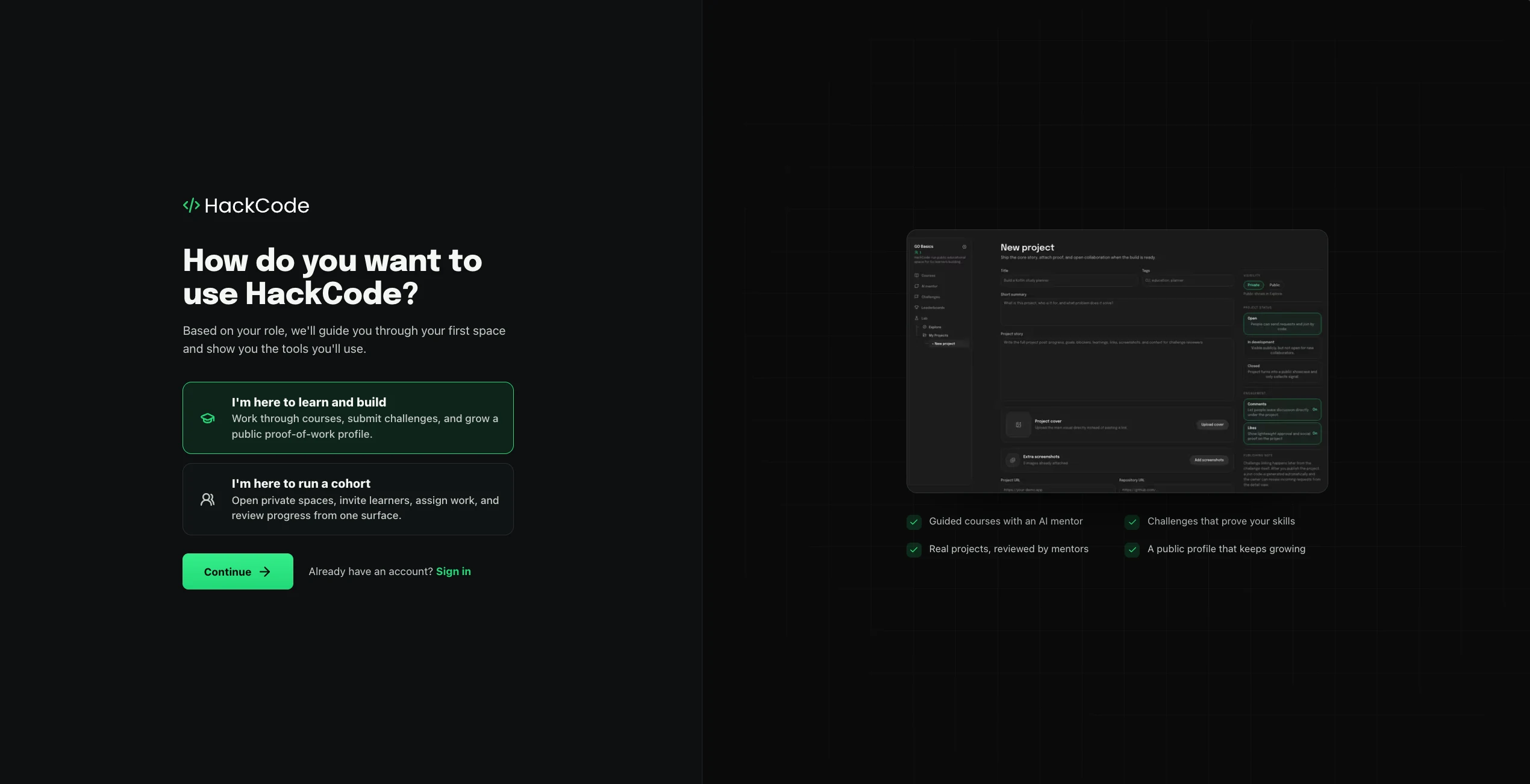
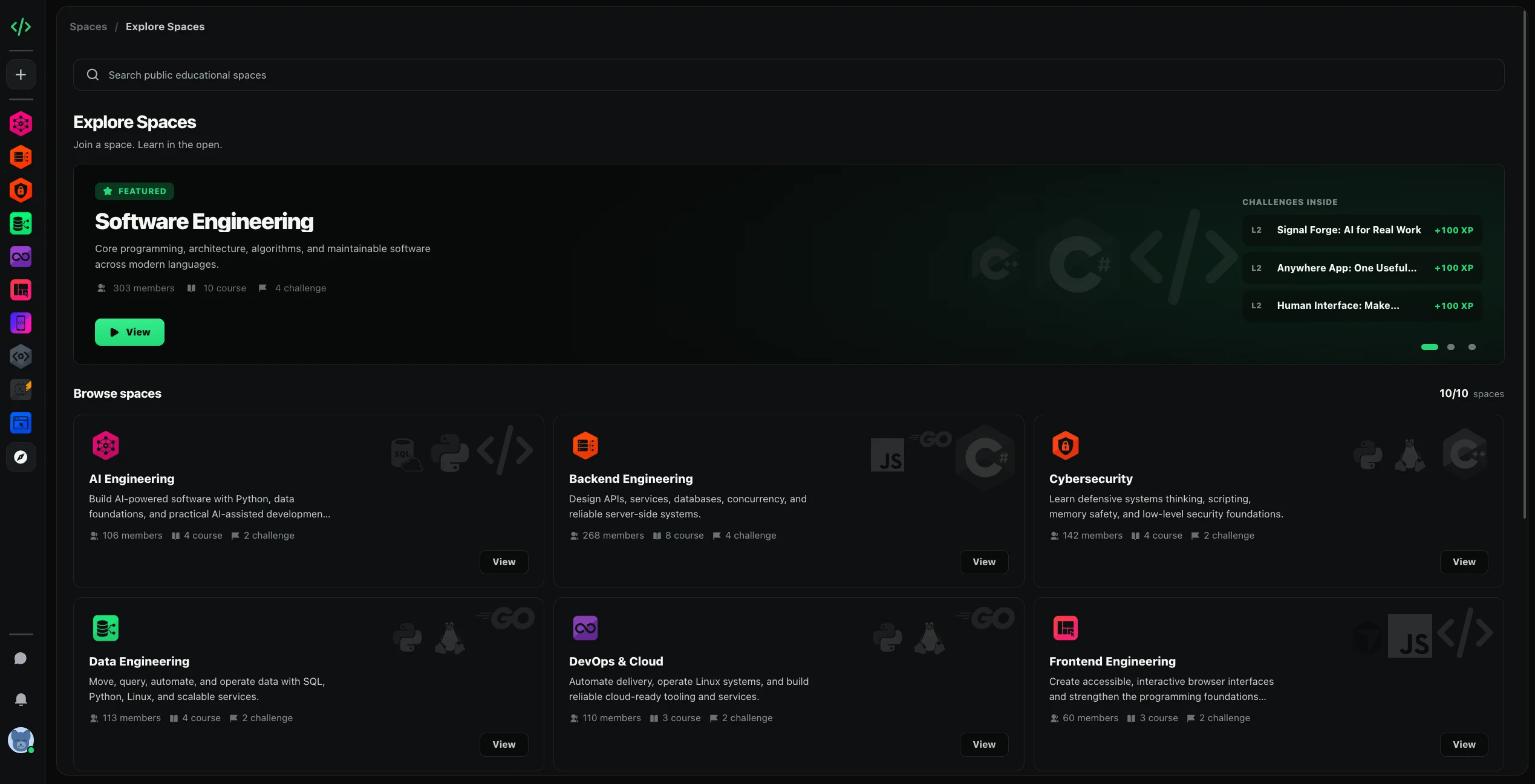
HackCode is a live coding platform organized into spaces. The simplest comparison is a Discord server built for learning: each space can have its own members, courses, lessons, challenges, projects, hackathons, mentors, and leaderboard.
Learners join public spaces to study and build. Mentors create private spaces for their own cohorts. Schools and companies can run several spaces and organize programs or hackathons without moving everyone into another product. Live at hack-code.net.
2026 · live product · Next.js 15 · Prisma · Postgres · Stripe · Gemini
Current adoption.
1,000+
accounts created on HackCode
20+
original courses with more than 1,000 lessons
20+
hackathons launched on the platform
300
challenges solved by learners
Why spaces
Most coding platforms focus on one thing: classroom delivery, public practice, or hiring assessment. Learners and mentors then have to move between separate tools.
HackCode puts those activities in one place. Learners study and build in public spaces. Mentors run private cohorts. Schools and companies can manage several spaces and launch their own hackathons.
What is live today
This is the live product today. People can create an account, join a space, study a course, solve challenges, publish projects, enter hackathons, and pay for an individual plan or a private cohort.
Original courses and lessons
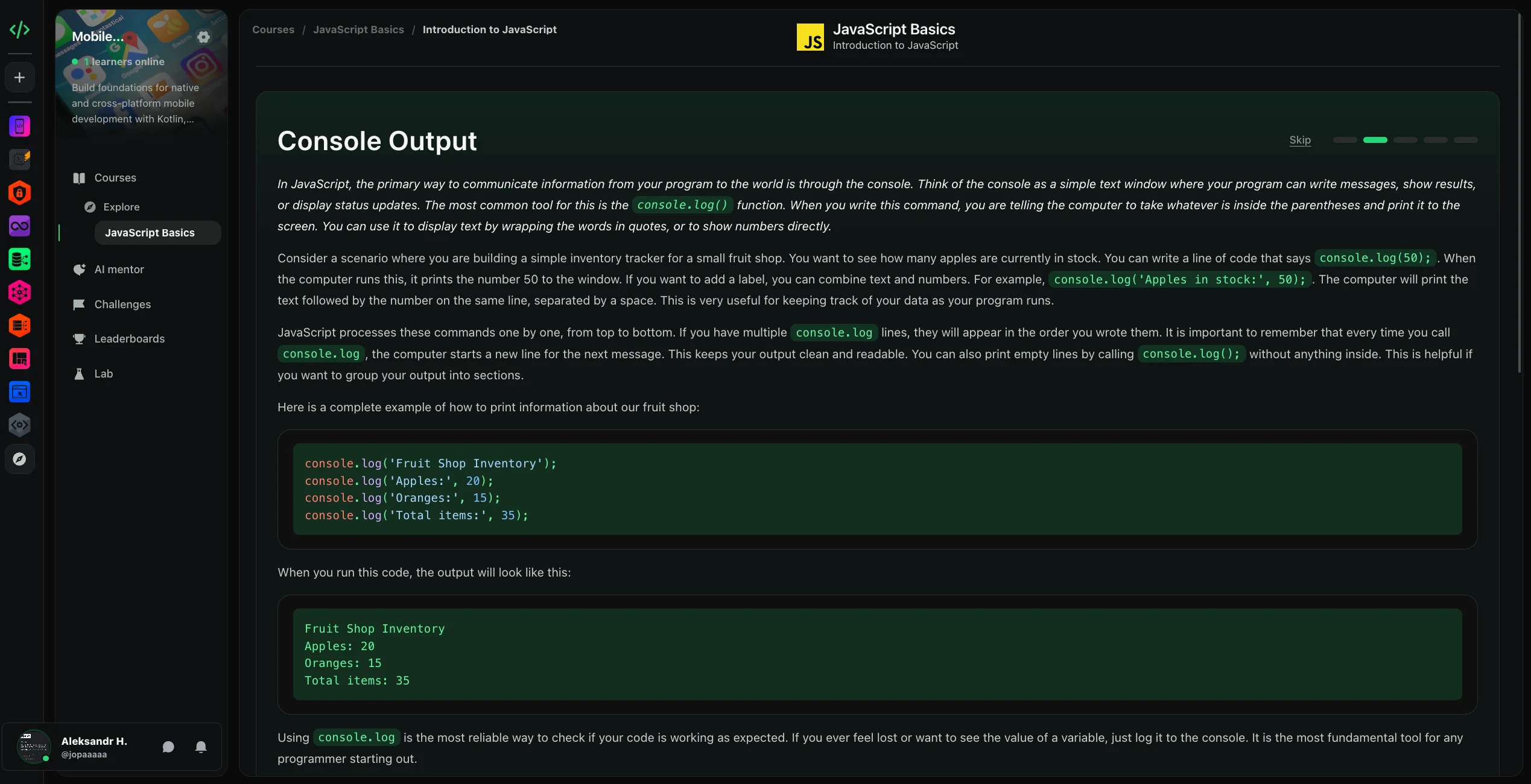
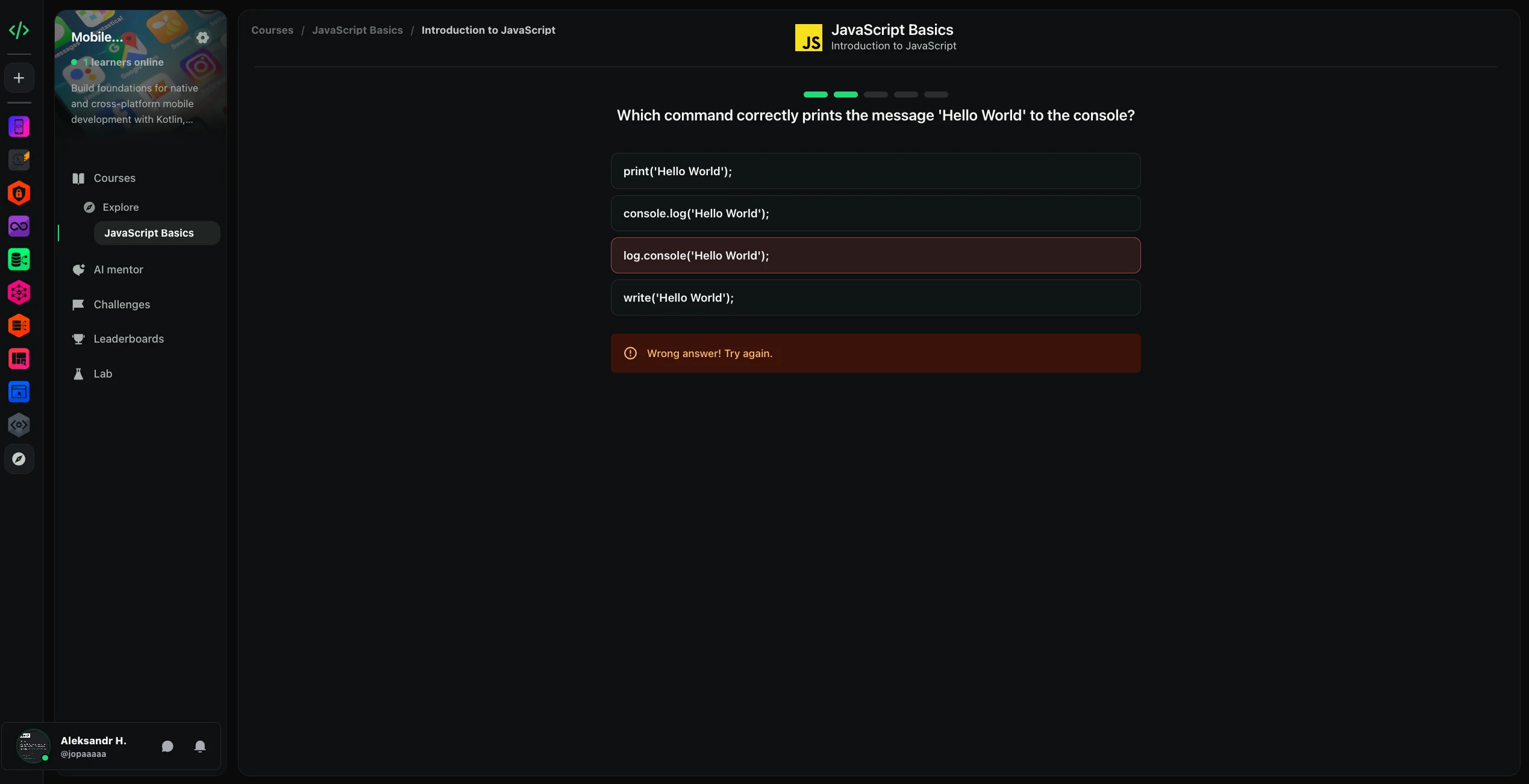
More than 20 courses and more than 1,000 lessons created specifically for HackCode, with theory, questions, and practical work inside the same product.
Public and private spaces
Public spaces work like open learning communities. Mentors create private spaces for cohorts, invite learners, add courses and challenges, and follow progress from one place.
Hackathons and challenges
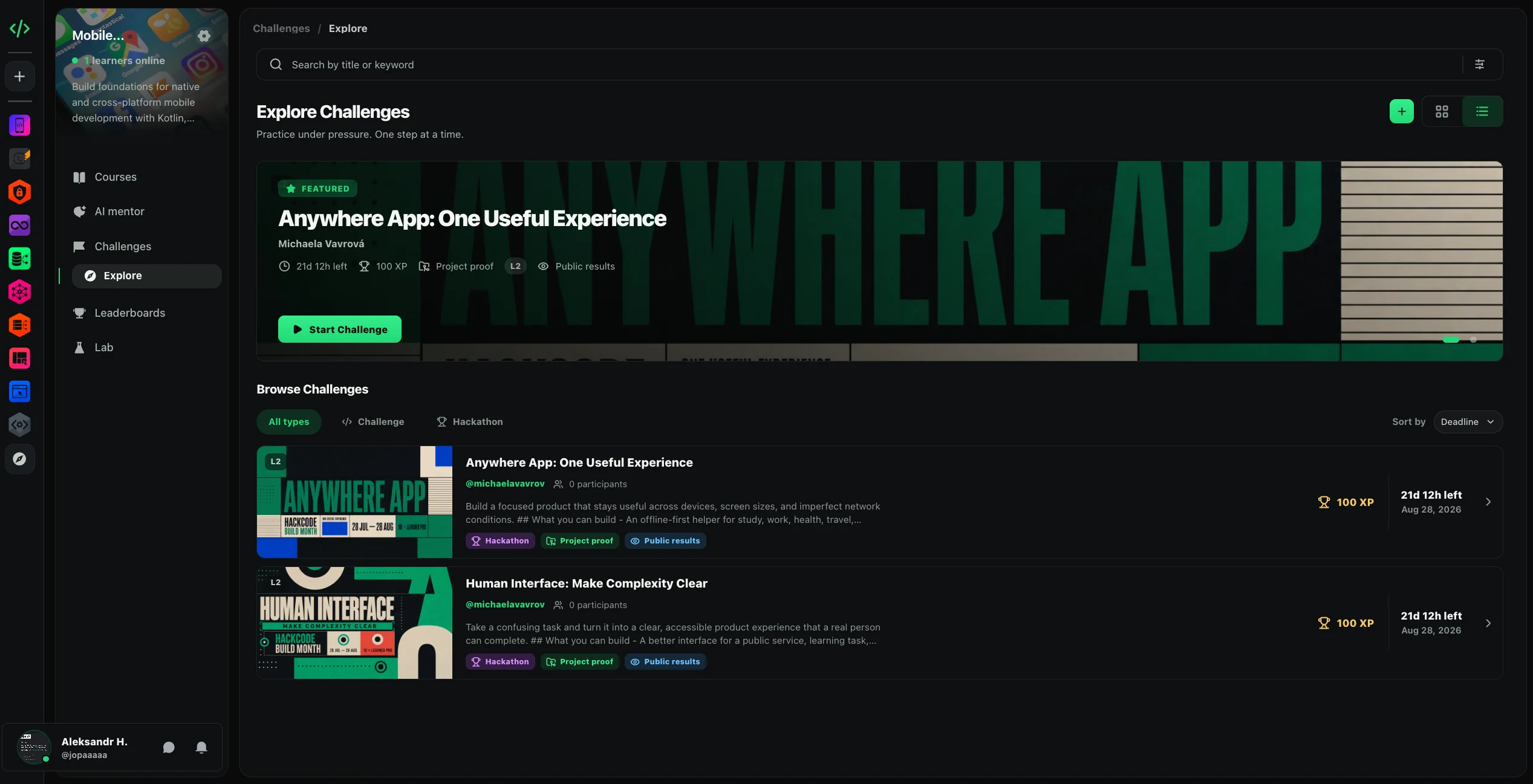
More than 20 hackathons have already launched on the platform. Challenges support code or project submissions, public or private results, review, and winner galleries.
Projects and proof of work
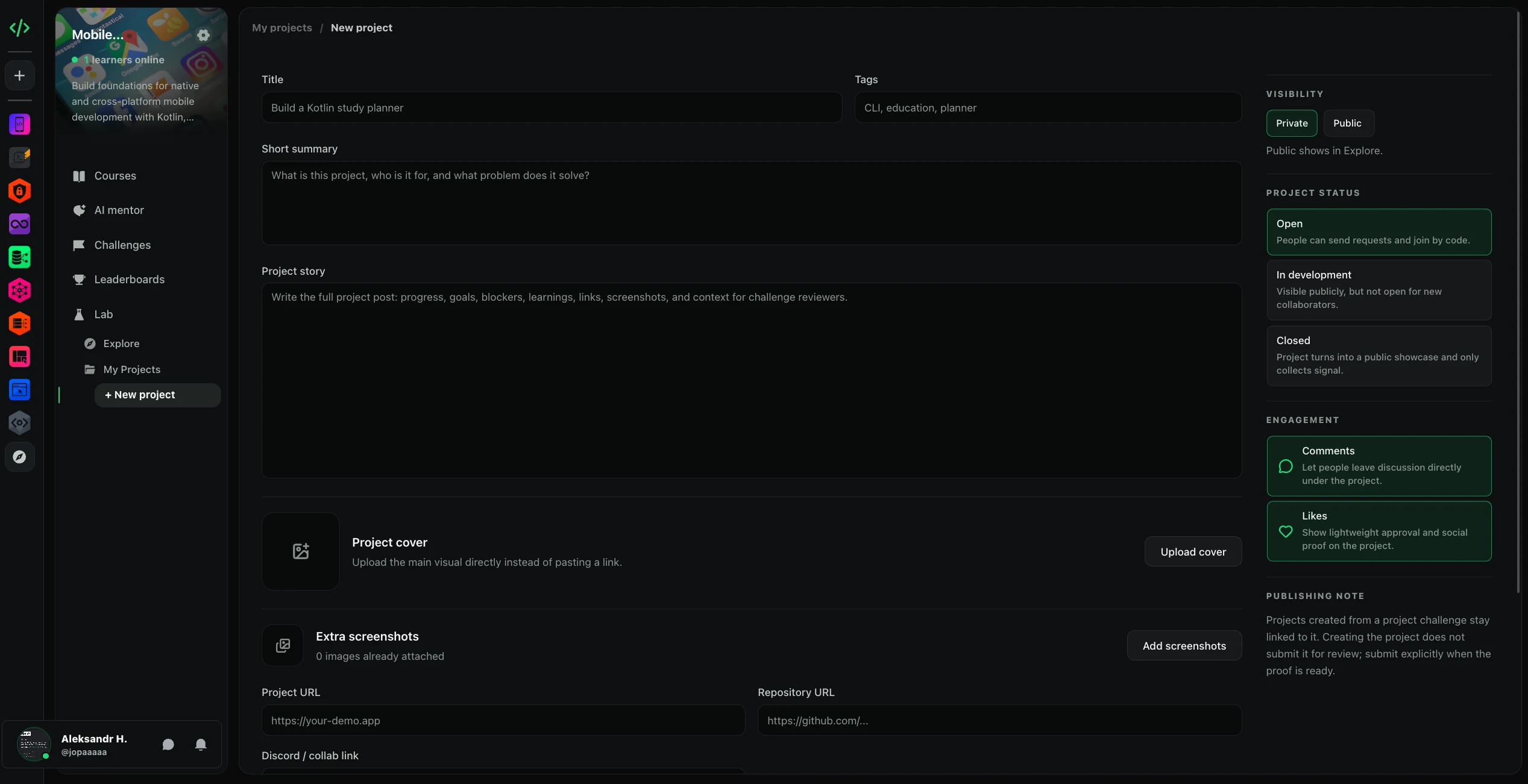
Learners can publish projects with links, screenshots, collaboration details, and attached challenge submissions instead of keeping all progress inside course scores.
Real billing
Self-serve subscriptions, promo activation, checkout, customer portal, renewals, and seat-based billing for mentor cohorts are connected to the live product through Stripe.
AI tools where they help
AI mentoring, course generation, challenge setup, and assisted review support learners and mentors without replacing the course, project, or human review experience.
One account across the platform
One account moves everywhere. A learner can join a public community today, enter a mentor's private cohort tomorrow, and take part in a company hackathon without creating a second profile.
Learner
Joins public spaces, studies original courses, solves challenges, publishes projects, enters hackathons, and keeps the same profile everywhere.
Mentor
Creates a private space for a cohort, invites learners, adds courses and challenges, and follows progress from one place.
School
Runs separate spaces for classes and programs while mentors and learners keep one HackCode account.
Company
Launches hackathons or private challenge spaces and evaluates people through the work they actually submit.
Competitor landscape
Each competitor is strong at one part of the market: classroom delivery, public practice, or hiring assessment. HackCode is trying to connect all three inside one product.
Competitor
What they clearly own
Where HackCode is different
Scale
Threat
CodeHS
School-first coding curriculum and teacher workflows
Built around institutions, with little public learner work or community
8/10
7/10
Codio
Hands-on labs and classroom delivery
Strong classroom tools, but little public community or learner identity
7/10
8/10
GitHub Classroom
Assignments, repositories, and autograding inside GitHub
Useful teacher tooling, but not a learning network learners return to
9/10
5/10
Exercism
Free coding practice with real mentorship
Strong practice, but limited support for schools and company hackathons
6/10
8/10
Codewars
Gamified public coding challenges
Strong practice community, but weak for private cohorts and organizations
8/10
6/10
LeetCode
Interview preparation and problem-solving practice
Focused on interviews rather than courses, mentors, and learning communities
10/10
7/10
CodeSignal
Skills assessments trusted by employers
Strong assessment product, but not a place where learners study together
9/10
8/10
The product only works if a space feels useful on its own: a real community for learners, a real cohort tool for mentors, and a real place to run programs or hackathons for organizations.
From the product
Screens from the live product: spaces, courses, challenges, and projects.
My role
I co-founded HackCode and remain directly involved in the product, engineering, and production operations.
Fullstack
Built across the Next.js frontend, API routes, Postgres data model, authentication, billing, course and challenge tools, projects, hackathons, deployment, and production operations.
AI engineer
AI supports four clear jobs: mentor conversations, course generation, challenge setup, and assisted review. Each feature sits inside a normal product flow instead of becoming a separate chatbot.
System builder
One space foundation supports public communities, private cohorts, courses, challenges, projects, leaderboards, billing, and organization controls, so the product stays understandable as it grows.
Live at
hack-code.net. Create an account, join a public space, and start with a course, challenge, project, or hackathon.
For hiring or partnership discussions, write to
[email protected]. I can privately walk through the schema, billing, mentor tools, and selected parts of the codebase, and provide supporting evidence for the adoption metrics above from relevant analytics or database records without exposing raw user data.